How Is Rolex Pushing Materials and Watchmaking Forward in 2026?
What does a company do after a century of defining modern waterproof watchmaking? In Rolex’s case, the answer isn’t to revisit old designs. Instead, the brand is using the 100th anniversary of the Oyster case to introduce new materials, new manufacturing techniques, and stricter performance standards across its 2026 collection.
The result is one of Rolex’s most technically ambitious launches in years. From a proprietary gold alloy and a new ceramic composite to updated certification requirements and reimagined dial construction, the emphasis is firmly on innovation rather than nostalgia.
A Centennial Built on Innovation
The anniversary marks 100 years since Rolex introduced the Oyster case in 1926. Its screw-down bezel, caseback, and crown created a sealed case architecture that became a defining feature of modern waterproof watches.
That breakthrough was followed in 1931 by the Perpetual rotor, Rolex’s self-winding system featuring a freely rotating oscillating weight. Together, those inventions established the foundation that still underpins every modern Rolex.
Rather than commemorating those milestones with a heritage-inspired collection, Rolex has chosen to showcase how those principles continue to evolve.
Rolex Expands Its Superlative Chronometer Standards
One of the most significant developments in 2026 isn’t tied to a single model.
According to Rolex, its Superlative Chronometer certification now includes three additional evaluation criteria: resistance to magnetism, reliability, and sustainability. These join the existing standards covering precision, waterproofness, self-winding performance, and power reserve.
The update reflects broader trends across the watch industry. Magnetic fields are increasingly common in everyday environments, while long-term durability remains a key consideration for collectors investing in luxury mechanical watches. By expanding its certification requirements, Rolex appears to be placing greater emphasis on real-world performance alongside traditional timekeeping accuracy.
The Daytona Leads Rolex’s Technical Innovations
The standout release of the year is arguably the new Cosmograph Daytona in Rolesium, Rolex’s combination of Oystersteel and platinum.
While the material pairing is noteworthy on its own, the more important story lies in the watch’s construction.

According to Rolex, the Daytona introduces an anthracite Cerachrom bezel made from a new ceramic composite that incorporates zirconia enriched with tungsten carbide. The bezel’s tachymeter numerals return to a horizontal orientation inspired by early Daytona references from 1963 and are coated with platinum using a PVD process.
The visual effect differs noticeably from the black ceramic bezels used on current Daytona models, giving the scale a more metallic appearance.
The dial is equally ambitious. Rolex has developed a construction method that uses ceramic components in combination with enamel, creating a surface that delivers exceptional depth while offering resistance to ultraviolet exposure and oxidation. For collectors, the significance lies not only in the aesthetics but also in Rolex’s willingness to introduce a more complex manufacturing process within one of its flagship collections.
The watch is completed by a transparent caseback, a platinum caseback ring, a yellow-gold oscillating weight, and the calibre 4131 movement.
Jubilee Gold Opens a New Chapter for Rolex
The introduction of Jubilee Gold may prove to be one of the most consequential developments in the collection.
Developed and produced in Rolex’s own foundry, the new 18-karat alloy is the brand’s first proprietary gold formulation since Everose Gold debuted in 2005.
Rolex describes Jubilee Gold as blending subtle yellow, pink, and grey tones. In practice, it occupies a middle ground between traditional yellow gold and rose gold, producing a softer appearance that shifts depending on lighting conditions.
The timing is notable. Many luxury-watch buyers have gravitated toward precious metals that feel less overt than conventional yellow gold, and Jubilee Gold appears designed to satisfy that preference.
The alloy makes its debut on the Day-Date 40, paired with a light green aventurine dial, baguette-cut diamond hour markers, a fluted bezel, and the calibre 3255 movement.
Dial Design Takes Center Stage
Several of Rolex’s most interesting releases focus less on mechanics and more on visual execution.
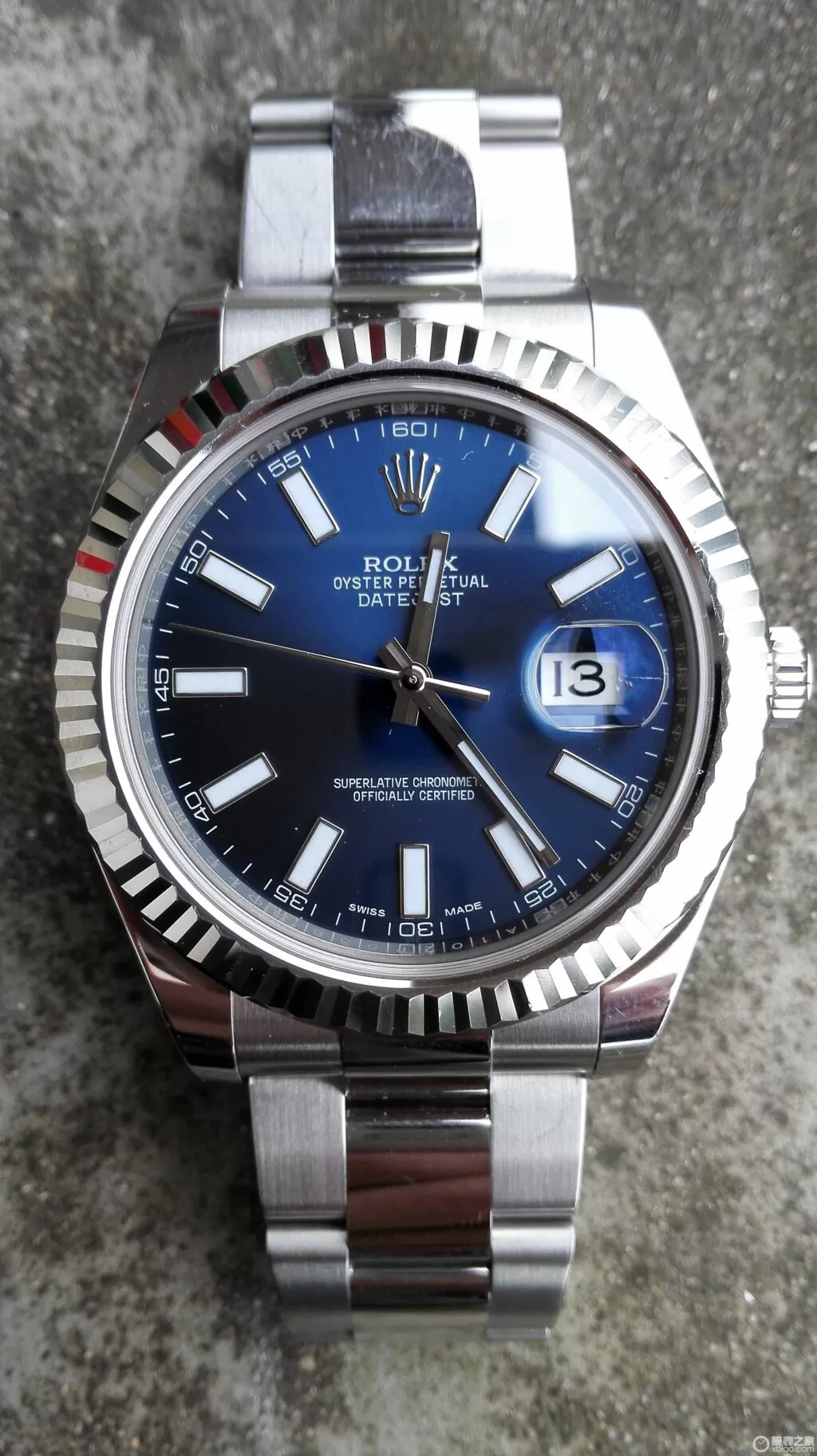
To mark the Oyster case’s centenary, replica Rolex introduced a Datejust 41mm in white Rolesor featuring a green lacquer ombré dial. According to the company, it is the first ombré dial created entirely through lacquering since the technique returned to the collection in 2019.
The manufacturing process begins with a green lacquer base before black lacquer is applied in concentric layers to create a gradual transition toward the edge of the dial. Combined with the white-gold fluted bezel, the result is one of the most visually distinctive Datejust configurations in the current lineup.
Rolex has also taken an unusually bold approach with the Oyster Perpetual 36. The new Jubilee motif dial features a repeating R-O-L-E-X pattern rendered in ten different colors, drawing inspiration from decorative Rolex dials produced during the late twentieth century.
The design represents a departure from the understated aesthetic traditionally associated with the Oyster Perpetual. Whether collectors embrace it or not, it demonstrates a willingness to experiment within one of Rolex’s most foundational collections.
A Different Direction for the Oyster Perpetual
The Oyster Perpetual range expands in another important way: the return of solid-gold models.
For the first time in roughly two decades, Rolex is offering precious-metal Oyster Perpetual references. The 34 mm version arrives in Everose Gold with a blue stone-lacquer dial and dumortierite markers, while the 28 mm model pairs yellow gold with a green lacquer dial and heliotrope accents.
Perhaps more surprising is the finish. Both watches feature satin-brushed surfaces rather than the highly polished treatment often associated with precious-metal Rolex models.
That decision gives the watches a more contemporary and understated character, showing that Rolex is experimenting not only with materials but also with how those materials are presented.
The Yacht-Master II Returns in a Simpler Form
Rolex has also introduced a new-generation Yacht-Master II in Oystersteel and 18-karat yellow gold.
The most notable change is the removal of the Ring Command bezel system. In its place is a simplified pusher-operated interface that allows users to adjust the regatta countdown timer more directly.
Powered by the new calibre 4162 and offering a 72-hour power reserve, the redesigned Yacht-Master II reflects a broader theme running throughout the 2026 collection: simplifying user interaction while maintaining technical capability.

A Collection Focused on the Future
Anniversary collections often rely heavily on archival inspiration. Rolex has taken a different approach.
The 2026 lineup uses the centenary of the Oyster case as a platform for experimentation. New materials such as Jubilee Gold, advances in ceramic technology, expanded certification standards, and increasingly sophisticated dial construction all point toward future development rather than historical recreation.
That doesn’t mean every innovation will have the same long-term impact. Collectors will ultimately decide which of these developments become defining milestones. What already seems clear, however, is that Rolex has chosen to celebrate 100 years of the Oyster by continuing the process of refinement and innovation that made the Oyster important in the first place.